
Welcome to the guide for adding follow-up, instructions to your engaged. Survey in this video, we'll walk you through the process of adding follow-up instructions to questions, in your survey, in various use cases of this feature, follow up instructions. Allow you to guide the AI on how to ask follow-ups to the original question to get better insights, or to keep the AI on track.
Login to Engage
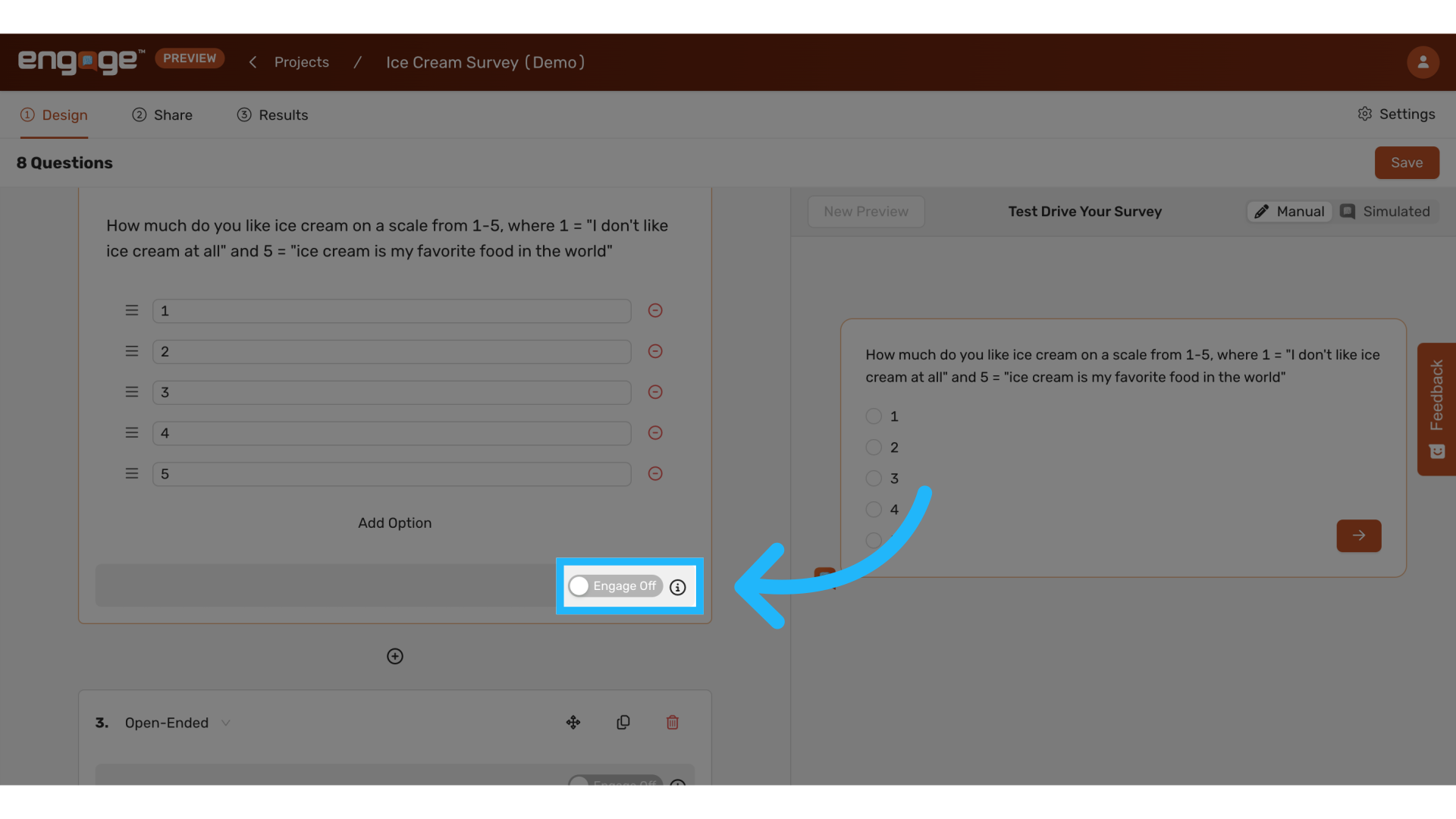
1. Toggle on follow up instructions
To begin using this feature toggle and follow-up instructions.
Common Use Cases:
- Some common use cases for instructing AI to ask follow-ups are to collect clearer and deeper insights.
- To follow up based on previous responses.
- For vague responses.
- To limit follow-up questions.
- For more specific instructions.
1. To collect deeper insights:
- Continue asking open-ended questions to understand what the participant thinks about ... in as much detail as possible.
- Ask open-ended follow-up questions that encourage participants to share detailed explanations. Probe for specific reasons why they believe...
- Listen for and probe on: Language or phrasing, Emotion, Tone, and their thoughts and feelings regarding ...
- Continue the interview until you get a FULL picture of what had occurred with this person.
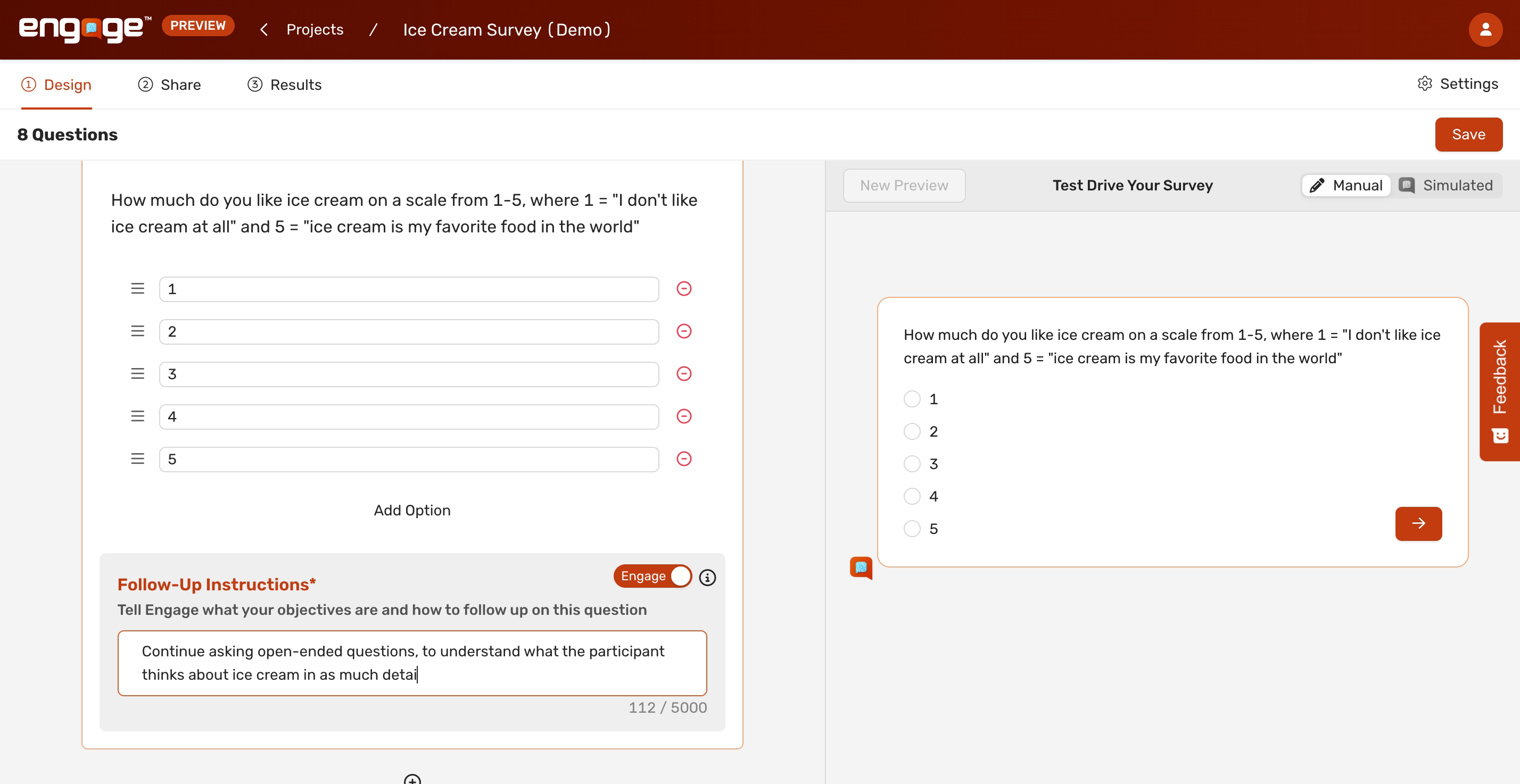
Collect deeper insights example 1:
For example, if you want to follow up on why the participant likes ice cream to the extent that they do, then you can instruct AI to continue asking open-ended questions to understand what the participants think about ice cream and as much detail as possible.
Collect deeper insights example 2:
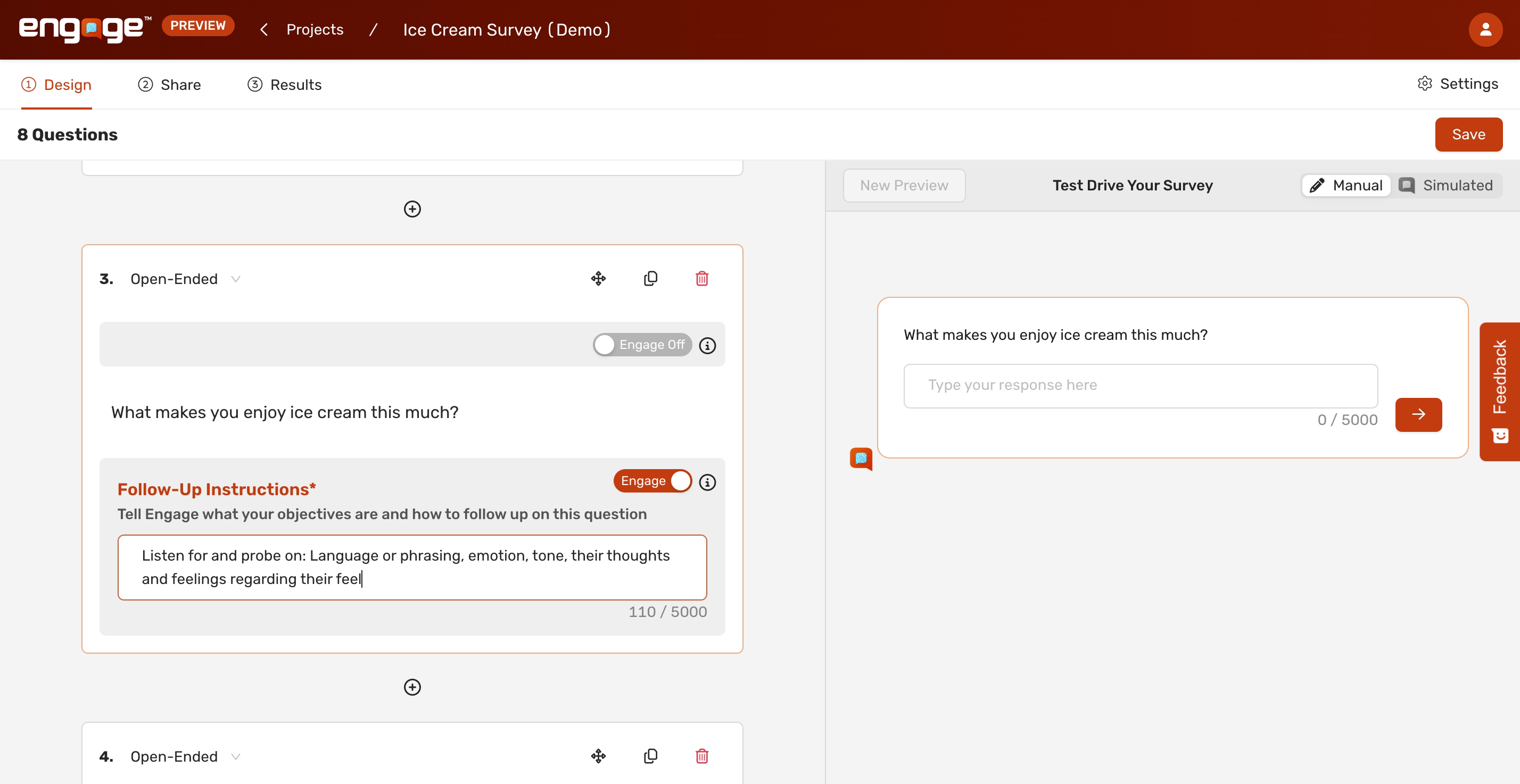
For example, if you've asked the participant what makes them enjoy ice cream this much, you can add a follow-up to listen for and probe on language or phrasing, emotion, tone, their thoughts and feelings regarding ice cream.
2. Follow up based on previous responses:
- Follow up to probe for specific details as to why the participant values ... Refer back to ... to compare.
- Follow up to get a better understanding of what went well or did not go well depending on how the participant responds.
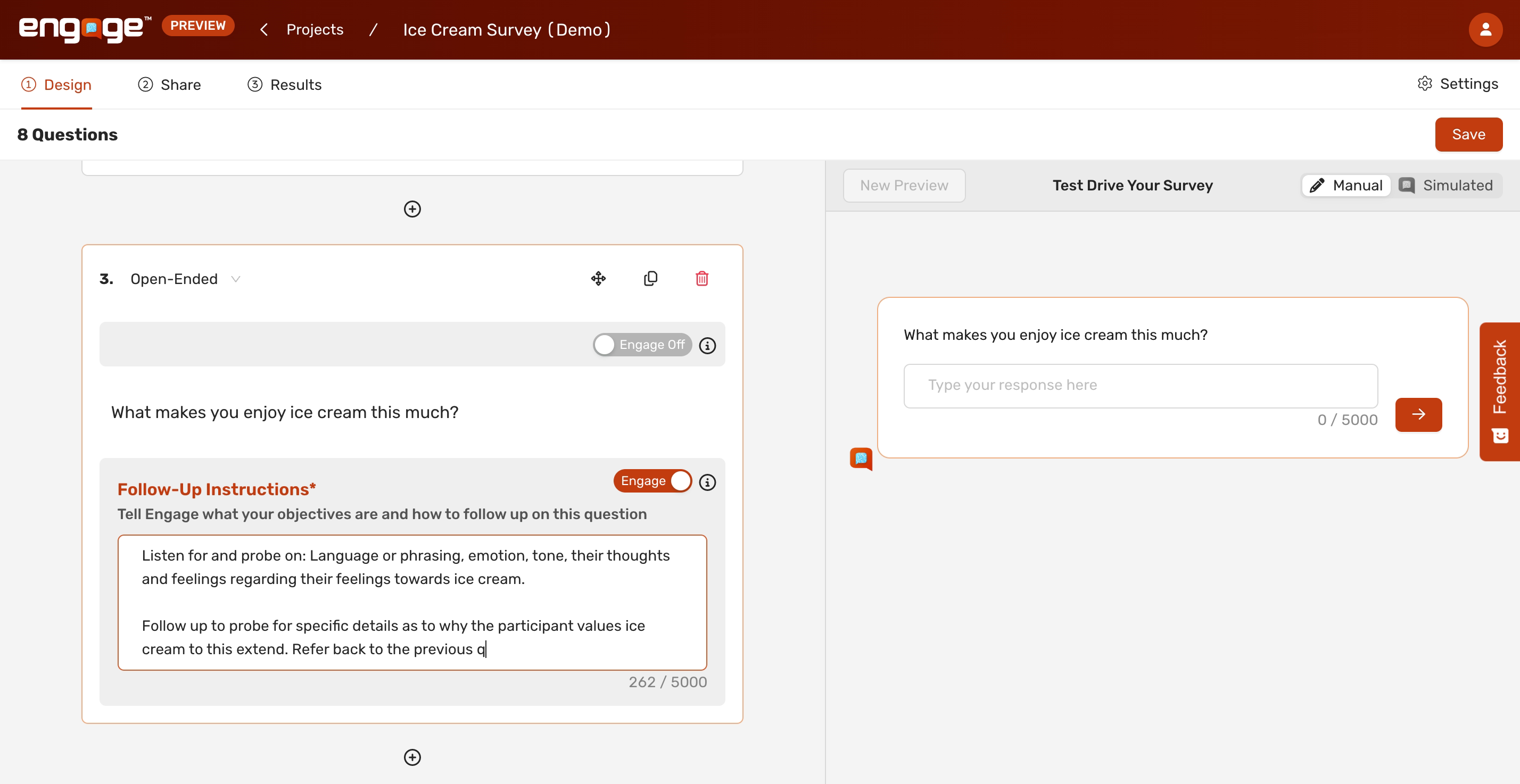
Follow up based on previous responses example:
For example, when asking AI to follow up and probe for specific details as to why the participant values ice cream to this extent, You can instruct AI to refer back to a previous question to compare.
3. For vague responses:
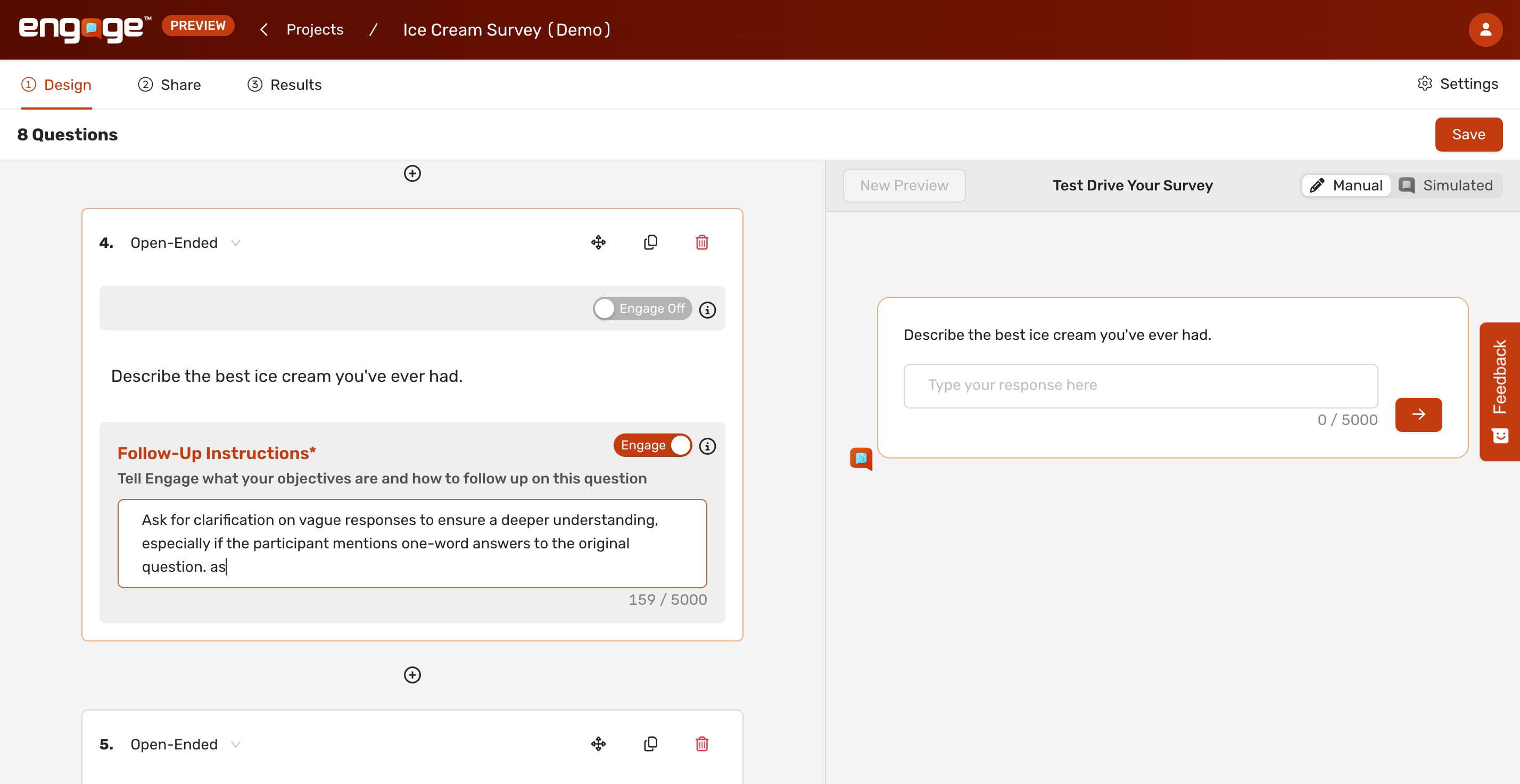
- Ask for clarification on vague responses to ensure a deeper understanding, especially if a participant mentions one-word answers to the original question, asking them to explain more about ...
- Ask for clarification or more details when responses are vague or general.
- If they answer that they can't recall, encourage them to make their best guess.
Vague response example:
For example, if participant provided a vague response or one word answer, you can instruct AI to "ask for clarification on vague responses to ensure a deeper understanding, especially if the participant mentions one-word answers to the original question asking them to explain more."
4. Limit follow up questions:
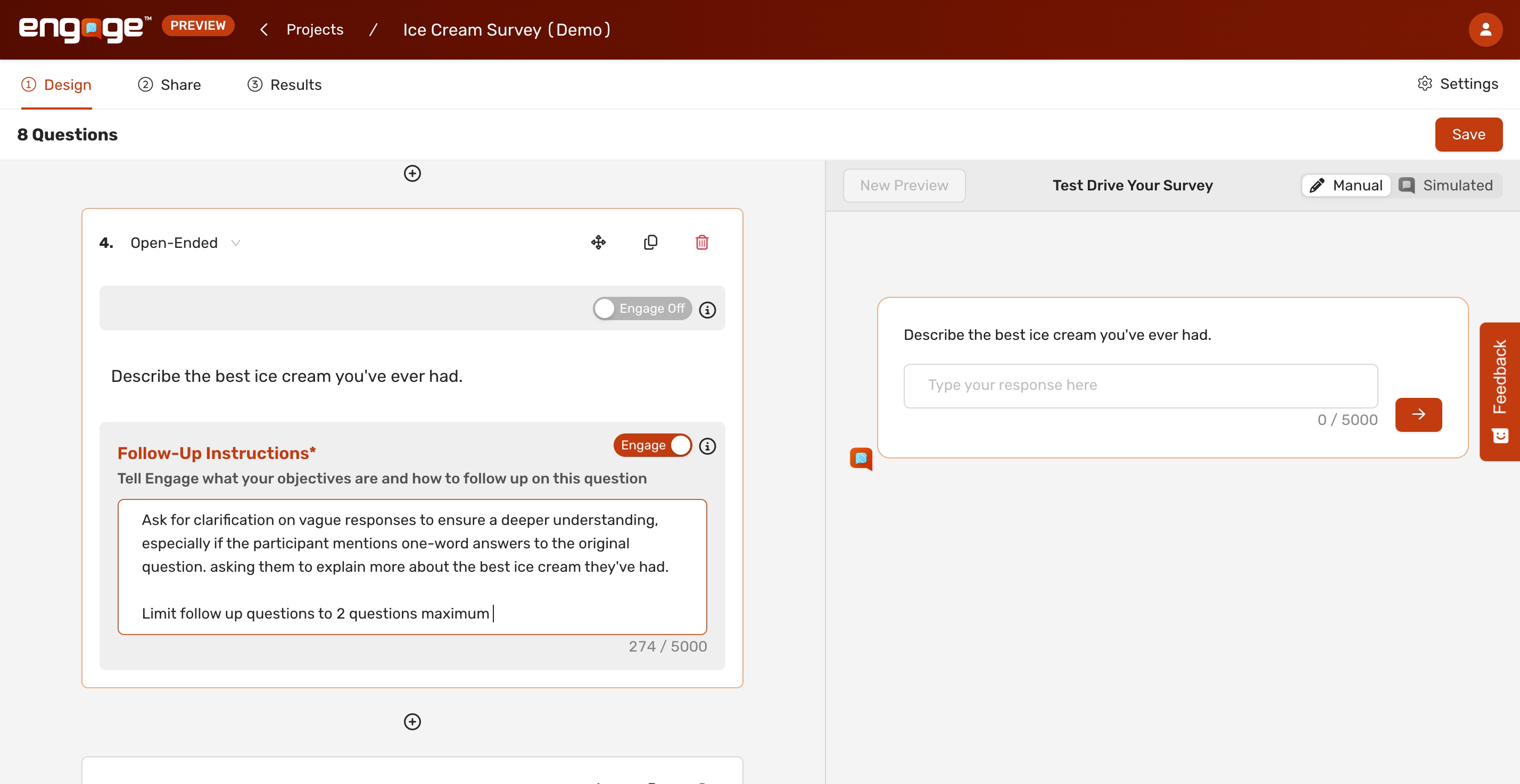
1. Limit follow up questions to 3 questions maximum if needed. Then end follow up questions and move on. 2. If they provide sufficient information to the first follow up question, then do not ask any more follow up questions. 3. Always, only ask one question at a time!
Limit follow up questions example:
For example, add "Limit follow up questions to 2 questions maximum if needed. Then, end follow up questions and move on."
5. Specific instructions
Specific instructions example:
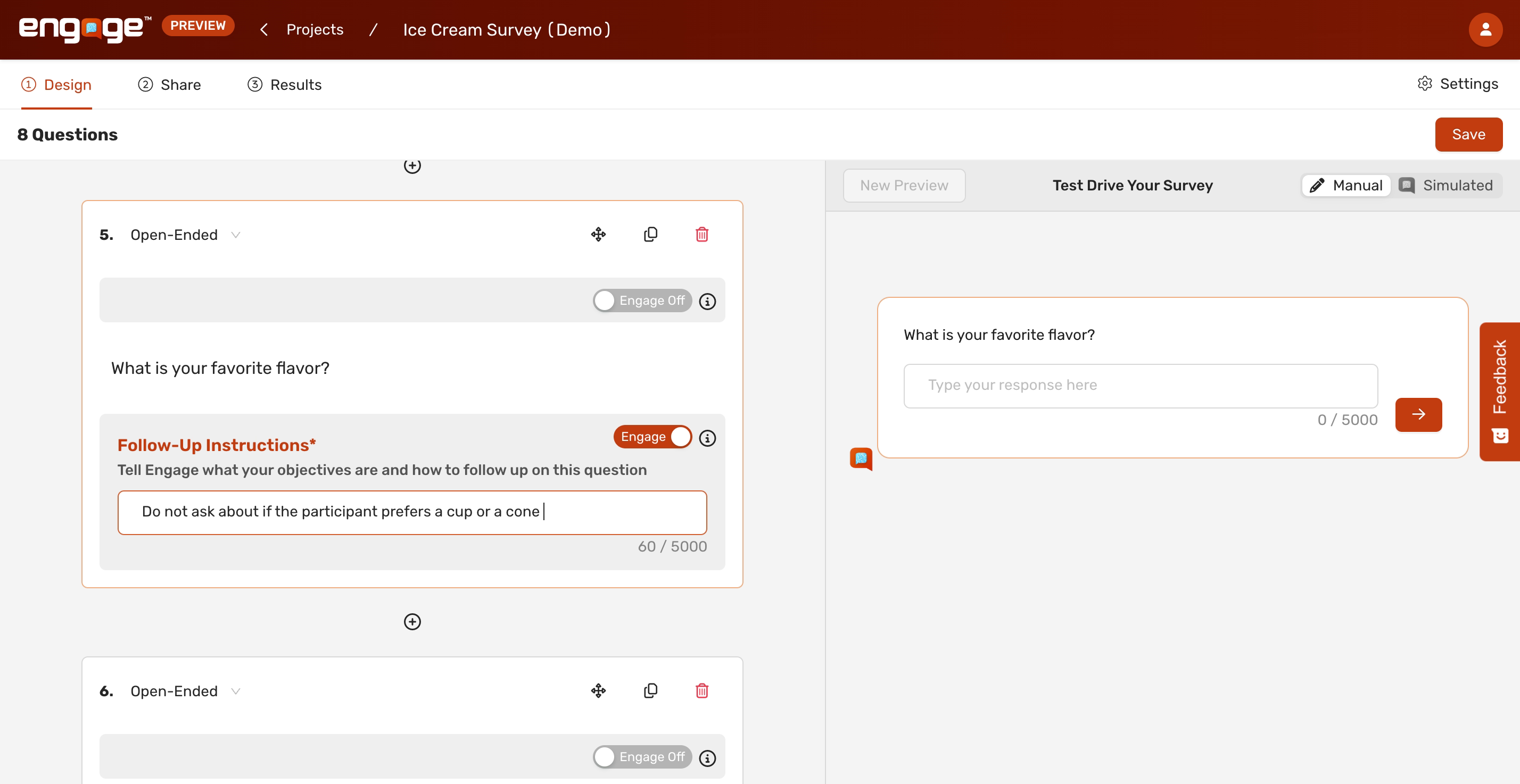
For example, instruct AI "Do not ask about if the participant prefers a cup or a cone with their favorite flavor. "
Thank you for reviewing this guide. If you have any further questions or require additional assistance, please contact our support team or explore our other resources.
Comments
0 comments
Please sign in to leave a comment.